
AI Should Learn Like Children
A Hypothesis on Artificial Intelligence, Child Cognitive Development, and the Limits of the Statistical Mind
Translated from the Portuguese original AI deveria aprender como crianças
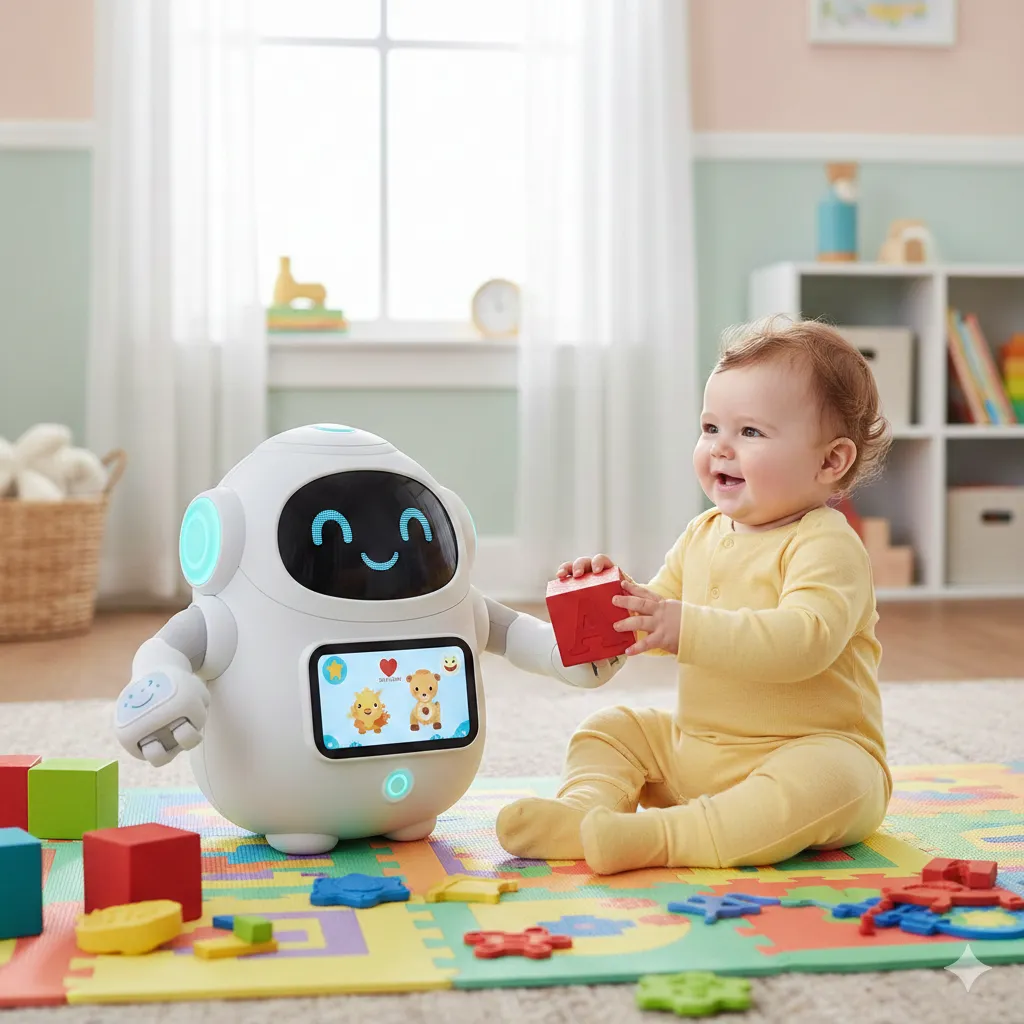
A Hypothesis on Artificial Intelligence, Child Cognitive Development, and the Limits of the Statistical Mind
─────────────────────────────────────
“Intelligence is the efficiency with which a system acquires new skills outside its training domain.”
— François Chollet
“The problem is not to build a machine that thinks, but to build a machine that learns to think.”
— Yann LeCun
Introduction: The Invisible Bottleneck
There is a scene that repeats itself, with variations, in artificial intelligence laboratories around the world. A state-of-the-art language model — trained on quantities of text that no human being could read in a thousand lifetimes — is presented with a simple visual reasoning problem: given a three-by-three grid with color patterns, infer the rule and complete the fourth example. The model fails. Not occasionally, not under specific adversarial conditions. It fails systematically, while a four-year-old child, armed only with her eyes and her tireless curiosity about how things work, would solve the same problem in a matter of seconds.
This essay starts from that disconcerting asymmetry — not to denigrate the magnitude of what large language models have achieved, but to investigate what it reveals about the nature of intelligence, the limits of current architectures and what a serious hypothesis about Artificial General Intelligence should take into account. The central thesis I propose here is neither a formalized academic dissertation proposal nor an engineering roadmap with verifiable milestones. It is a philosophical-technical hypothesis: the idea that AGI cannot emerge from architectures of passive learning and static structure, and that the most promising path lies in emulating the cognitive mechanisms of child development — intrinsic curiosity, evolutionary priors, the dynamic world model, and continual learning anchored in embodiment.
To develop this argument, I will traverse four large territories. First, I will offer an honest diagnosis of the current state of LLMs and deep-learning architectures, identifying their real achievements and their structural bottlenecks. Second, I will revisit the psychology of child cognitive development, not as an inspirational metaphor, but as a technical reference model. Third, I will map the alternative and hybrid architectures that try, from different angles, to bring machine learning closer to biological learning. Finally, I will present the thought experiment that gives this essay its title — the Room of the Curious Child — as a philosophical tool for illuminating what separates statistical competence from genuine intelligence.
A caveat before beginning: this is not a text of technological pessimism. Transformers and LLMs represent a genuine civilizational leap. Language is, as I will argue, one of the most sophisticated forms of knowledge compression that humanity has produced, and models capable of operating in that space with the fluency we observe today are extraordinary instruments. The problem is not what they do. The problem is what they will continue to be unable to do as long as the underlying architecture remains fundamentally passive, static and disembodied.
Part I: The Triumph and the Ceiling — What LLMs Have Conquered and Where They Stopped
1.1 The Revolution of Language as Latent Space
To understand where large language models have failed, one must first understand — with the seriousness the feat deserves — what they have achieved. Language is not merely a means of communication. It is, possibly, the most powerful cognitive technology the human species has developed: a symbolic system of compression that allows concepts to be transmitted, combined and recombined across time and space. When a child learns the word ‘gravity,’ she does not learn merely a label. She gains access to a dense network of conceptual relations that other humans took centuries to formalize.
LLMs, by learning to model the statistical distribution of language sequences at industrial scale, did something that should not be underestimated: they captured, in their weights, a functional shadow of this conceptual network. When we ask GPT-4 or Claude Sonnet about the relationship between entropy and information, or ask them to explain the intuition behind Bayes’ Theorem, these models often produce answers that are not only correct but pedagogically sophisticated — answers that reflect a structural understanding of the relations between concepts, not just a retrieval of superficial patterns.
This matters because language, as the linguist and philosopher Dan Sperber observes, is the medium through which cultural knowledge accumulates and is transmitted from generation to generation. A model trained on the entire digitally available textual output is, in a sense, distilling centuries of collective cognition. It is an unprecedented feat in the history of computing — and perhaps of civilization.
The transformer architecture that makes this possible deserves a few paragraphs. The multi-head attention mechanism, introduced in 2017 in the seminal paper ‘Attention Is All You Need,’ solves a problem that had frustrated decades of research in natural language processing: how to capture long-range dependencies in sequences. Instead of processing tokens sequentially, as RNNs did, the transformer computes the relevance of each token with respect to all the others simultaneously. The result is a contextualized representation in which the meaning of each word is a function of its complete context — which is, curiously, what linguists have always said about how humans process language.
Scaling, then, did something extraordinary: as we increased the number of parameters, the quality of reasoning seemed to scale non-linearly. Smaller models seemed merely to retrieve patterns; larger models exhibited something resembling the emergence of new capabilities — analogical reasoning, rule generalization, basic arithmetic — without these capabilities having been explicitly trained. The scaling laws of Kaplan et al. described a predictable progression: more data, more parameters, more computation resulted in better performance, measured by perplexity over language sequences.
1.2 The Scaling Barrier and the ARC-AGI Problem
But the scaling laws are coming to an end. Not abruptly — there is no cliff. There is an increasingly perceptible plateau. The marginal returns of adding parameters and data are diminishing. Models that cost tens or hundreds of millions of dollars to train are improving less and less on relevant benchmarks. And there is one benchmark in particular that captures the problem with surgical precision: ARC-AGI, the Abstraction and Reasoning Corpus for Artificial General Intelligence, developed by François Chollet.
ARC-AGI is elegantly simple in its structure and devastating in its implications. The system receives pairs of input-output examples — typically colored grids demonstrating a visual transformation — and must induce the rule that governs the transformation and apply it to a new input case. The examples are few: usually three or four. The rules involve concepts such as symmetry, counting, topological correspondence, spatial continuity — concepts that a four-year-old child masters intuitively.
The best language models, even the most advanced, perform modestly on ARC. This is not a problem of a poorly calibrated benchmark; it is a precise diagnosis. ARC measures exactly what Chollet defines as intelligence: the efficiency of acquiring new skills from very little information. An adult human, without specific training, solves most ARC problems with ease. A five-year-old solves a significant proportion. Models trained on trillions of tokens — with implicit access to all the physics, geometry and logic that human text contains — fail consistently.
The technical diagnosis is clear: LLMs have learned to interpolate within the distribution of their training data with extraordinary sophistication. But when confronted with situations that require synthesizing new rules from a few examples — what cognitive psychologists call ‘few-shot inductive learning’ — the statistical mechanisms that underpin the transformer are simply not the right instruments for the job. It is like trying to cut wood with a scalpel: the tool is extraordinarily precise for what it was designed for, but it is the wrong tool for this task.
1.3 The Structural Problem: Passivity, Staticity, Disembodiment
Beyond ARC, there are three structural limitations of LLMs that any hypothesis about AGI must confront directly.
The first is passivity. An LLM learns by observing text — an extraordinary quantity of text, but text produced by others, capturing the thought of others, describing the experiences of others. The model never acts in the world. It never tests a hypothesis. It never discovers that its prediction was wrong through a real physical consequence. The difference between learning that ‘eggs break when they fall’ by reading that sentence in text and learning the same by letting an egg fall from one’s hand is, I will argue, a difference of kind, not merely of degree. Active learning — discovery through action and the observation of consequences — produces representations structurally different from those produced by passive observational learning.
The second is staticity. The weights of an LLM, once trained, are fixed. The model you query today is identical, in terms of its internal parameters, to yesterday’s model — regardless of how many interactions it has had. There is research on continual fine-tuning and on reinforcement learning with human feedback, but these processes are slow, costly and subject to catastrophic forgetting: updating the weights to learn something new tends to destroy what was learned before. The human brain solves this problem elegantly, through mechanisms still incompletely understood that allow new memories to be consolidated without erasing old ones.
The third is disembodiment. An LLM has no body. It has no proprioception. It does not experience resistance, gravity, temperature, texture. Its concepts of ‘heavy,’ ‘hot,’ ‘rough,’ ‘distant’ are statistical relations between symbols — patterns of co-occurrence in text — not representations anchored in sensorimotor experience. This matters because, as I will argue in the next section, there are both empirical and theoretical reasons to believe that a substantial part of human cognition — including high-level abstract reasoning — is built upon sensorimotor foundations. Removing those foundations may be not merely a pragmatic limitation; it may be a constitutive one.
Part II: What a Child Knows — Cognitive Development as Model
2.1 Being Born with Priors: The End of the Tabula Rasa
The classical empiricist view of the infant mind, popularized by John Locke and perpetuated in various forms by behaviorism, is that of the tabula rasa: the child is born as a blank slate, and experience writes on it everything she will come to know. This view, although intuitively appealing in its egalitarian openness, is empirically false — and its falsity has profound implications for any attempt to emulate child learning in machines.
The research of Elizabeth Spelke, Karen Wynn, Renée Baillargeon and others in the field of infant cognition has demonstrated, through decades of meticulous experiments with habituation and eye-tracking techniques, that newborn babies arrive in the world equipped with a rich set of expectations about how reality works. Spelke called these expectations ‘Core Knowledge’ and identified several domains in which it operates: physical objects (cohesion, continuity, contact), agents (intentionality, means-end rationality), number (comparison of quantities, principles of counting) and geometry (spatial navigation, topological relations).
What makes this especially fascinating from the standpoint of AI is that this core knowledge is not learned from experience — it is present from birth, the product of millions of years of evolutionary selection. A four-month-old baby shows surprise when a solid object appears to pass through another solid object — a violation of the law of impenetrability that the baby never needed to learn explicitly. A six-month-old shows correct expectations about the addition and subtraction of small sets of objects, even before any formal mathematical instruction.
This means that child learning does not begin from zero. It begins with a set of structural inductive biases — predispositions to organize experience in certain ways, to formulate certain hypotheses rather than others, to notice certain regularities while ignoring others. These biases are not limitations; they are what makes efficient learning possible. Without them, the space of hypotheses compatible with any finite set of observations would be infinite, and learning would be computationally intractable.
The implication for AI is direct: architectures that initialize with random weights — with no structured prior about how the world works — are at a fundamental disadvantage relative to human learning. It is not a question of the quantity of data; it is a question of initial structure. More data trained on an architecture without priors will still, at some point, have to infer the regularities that the human baby brings with her from birth.
2.2 Active Learning and Curiosity as Algorithm
Watch an eighteen-month-old child for an hour. What you will see, with individual variations, is something remarkable: an extraordinarily efficient learning system operating in a mode of active, self-directed search. The child does not wait to be taught. She explores. She manipulates objects, tests their properties, forms expectations, checks those expectations, and revises her mental model when the expectations are violated. She seems intrinsically motivated to understand — not merely to respond to stimuli, but to build predictive models of the world around her.
Pierre-Yves Oudeyer and his collaborators formalized this process with the concept of ‘Learning Progress’ as a mechanism of intrinsic attention. The thesis is that children — and, hypothetically, AI systems inspired by them — do not distribute their attention randomly across the space of possible explorations. They focus on situations in which they are actively learning: where the prediction error is decreasing, where the internal model is being productively revised. Situations that are too simple (no novelty, no prediction error) bore. Situations that are too complex (pure noise, no detectable pattern) frustrate. The child gravitates toward the intermediate zone — what Vygotsky called the ‘zone of proximal development’ — where the challenge is calibrated to her current capacity.
This mechanism has considerable mathematical elegance. If we formalize a system’s prediction error about its own world model as a loss function, then the intrinsic motivation to explore can be encoded as a reward proportional to the temporal derivative of the error — not to the absolute error, but to the rate of change of the error. The system is not rewarded for being confused; it is rewarded for becoming less confused. This generates exactly the observed behavior: gravitating toward situations of productive learning, avoiding both the trivial and the chaotic.
There is something philosophically profound here. Curiosity, often treated as a mysterious emotion or a personality trait, reveals itself, in this formalization, as an optimization mechanism — a gradient signal that guides an agent’s exploration through the space of possible experiences so as to maximize learning efficiency. The curious child is not merely ‘being a child.’ She is executing, with an elegance that generations of AI engineers have not yet replicated, the optimal algorithm of active data collection.
2.3 Embodiment as Foundation — Not as Detail
Jean Piaget, whose work on the stages of child cognitive development remains a central reference in developmental psychology, made an observation that is often mentioned but rarely taken seriously in its radical implications: cognitive development begins at the sensorimotor stage. The child does not learn to think in abstractions and then apply that thinking to the physical world. She learns to think through interaction with the physical world. Abstract thought emerges from concrete action, not the other way around.
Piaget described how an eight-month-old learns the concept of object permanence — the understanding that objects continue to exist even when they are not directly observed. She learns this not by reading a definition, not by hearing an explanation, but by repeating, hundreds of times, the experience of seeing an object hidden, searching for it, finding it. The mental representation of ‘permanent object’ is built, literally, from cycles of action-perception-prediction-surprise-revision.
Contemporary neuroscience adds a layer to this observation: the neural representations of abstract concepts retain functional traces of their sensorimotor origin. When we think of ‘grasping,’ motor areas of the cortex activate. When we process metaphors of social temperature (‘she was cold to me’), the insular cortex — which processes physical temperature — shows activation. Embodied cognition, as a line of research, argues that cognition is not purely amodal computation over abstract symbols, but is fundamentally anchored in systems of action and perception.
If this is correct — and there is substantial evidence suggesting that it is — then AI systems that process language without any sensorimotor experience are building conceptual edifices on missing foundations. They can learn the relations between symbols that refer to physical experiences, but without the physical experiences that anchor those symbols to the world. It is a distinction that analytic philosophy has explored under the name ‘symbol grounding problem’: how do symbols acquire meaning if there is no anchoring in non-symbolic experience?
2.4 Neurological Development as Architectural Model
The infant brain is not just a smaller version of the adult brain. It is a system in active transformation — and the processes of that transformation are as revealing as the final state. Two processes deserve special attention: neurogenesis and synaptic pruning.
At the beginning of development, the brain produces synapses in enormous excess — an overabundance of connections between neurons that creates a highly plastic system, capable of capturing an extraordinary variety of patterns. As the child grows and learning occurs, synapses that are repeatedly activated are strengthened (long-term potentiation), while synapses that rarely fire are eliminated (synaptic pruning). The result is a network that becomes progressively more specialized and efficient — less plastic, but more effective at the tasks for which it was, through experience, calibrated.
This process has an intuitive analogy with regularization in machine learning — techniques such as dropout or weight decay that penalize unnecessary model complexity. But there are crucial differences. Synaptic pruning is structural: it eliminates physical connections, altering the topology of the network. Regularization techniques in artificial neural networks modify weights but keep the topology fixed. And biological pruning is use-guided — it preserves what is used and eliminates what is not, creating a system whose structure literally reflects the individual’s history of experiences.
There is also the critical period — a temporal window during which the brain is especially receptive to certain types of input. The famous research of David Hubel and Torsten Wiesel demonstrated that depriving a kitten of visual input during the critical period of development resulted in permanent deficits in visual processing, even if the input was later restored. During this window, the brain is not merely learning; it is configuring itself structurally to process certain types of information. Missing that period has irreversible consequences.
These mechanisms suggest that efficient learning may require not only the right exploration strategies and the right data, but the right temporal sequence of exposures — an idea that curriculum learning in AI tries to capture, but in a much more rudimentary way.
Part III: The Thought Experiment — The Room of the Curious Child
3.1 The Context of the Philosophical Rooms
The philosophy of mind has produced, in recent decades, a series of thought experiments that have become landmarks of the debate on consciousness, intentionality and cognition: John Searle’s Chinese Room, Frank Jackson’s Mary’s Room, Hilary Putnam’s Brain in a Vat, David Chalmers’ Philosophical Zombies. These experiments are not empirical arguments; they are conceptual devices — tools for testing intuitions, revealing hidden presuppositions and illuminating distinctions that everyday discourse tends to obscure.
Searle’s Chinese Room, in particular, is relevant as a starting point. In it, a monolingual English speaker is confined to a room with a set of rules (in English) for manipulating Chinese symbols. Messages in Chinese enter through the slot; the occupant applies the rules, manipulates the symbols, and produces responses that, to external observers, seem to demonstrate fluent understanding of Chinese. Searle argues that the system — the man plus the rules plus the symbols — does not understand Chinese in any meaningful sense. It manipulates syntax without access to semantics. Form without content. Symbol without meaning.
There is a vast philosophical debate about the validity of this argument. But what matters here is not whether Searle is right about consciousness, but what the experiment illuminates about a specific type of cognitive limitation: the possibility of producing correct outputs without possessing the internal representation that normally underpins those outputs. It is exactly this limitation that I want to explore in relation to LLMs — and I want to do so with a different thought experiment, which I call The Room of the Curious Child.
3.2 The Room of the Curious Child: Description of the Experiment
Imagine two rooms. In each room there is a child — or what appears to be a child. But the rooms are structurally very different.
The first room is the Room of the Statistical Child. In it, we find a system that was given, before being placed in the room, all the scientific and popular literature ever produced on physics, chemistry, biology, psychology and engineering. It received transcripts of lectures, instruction manuals, scientists’ diaries, accounts by explorers. If you ask this system what happens when a ball rolls down a ramp, it will produce a precise and sophisticated description of the relevant kinematics, mention the angle of inclination, the coefficient of friction, the gravitational acceleration, perhaps cite Galileo and his experiments in Pisa. The answer is impeccable.
But the room is empty. There are no objects. There is no ramp, no ball, nothing to manipulate. The system has never pushed anything. It has never seen an object roll, never calibrated an expectation based on an observation, never felt the surprise of seeing something act differently from what was predicted. When you place a ball in the room for the first time and push it toward the system, what happens? The system does not catch it. It does not react adaptively. It does not explore its properties. It simply produces more text describing what should be happening.
The second room is the Room of the Curious Child. In it, there is no library. There are no manuals. There is only an agent — endowed, like a human baby, with certain structural priors about reality (objects are solid, agents have intentions, causes precede effects) — and a room full of objects: wooden blocks of different sizes and weights, ramps of variable inclination, containers of different shapes, strings, springs, weights, pulleys. There are no instructions. There is no curriculum. Only the agent, the objects, and time.
What does the Curious Child do? She explores. She picks up a block, drops it — observes. Picks up another, larger block — drops it — notes that it fell with a different sound. Stacks blocks, watches the tower collapse — rebuilds differently, more carefully. Places an object on the ramp — sees it roll — changes the angle of the ramp — notes that it rolls faster. In each cycle, she is doing something precise: formulating a hypothesis (implicit, non-verbal), testing it through an action, observing the result, and updating her internal model of how the world works.
After a day in this room, the Curious Child will not be able to articulate Newton’s laws in formal language. But she will know, with a depth that no library can confer, that heavier objects are harder to move, that inclined surfaces change the trajectory of objects, that well-balanced structures are more stable, that certain pulley arrangements make it possible to lift weights with less effort. She will know this in the most robust sense: she will have internal representations anchored in experience, which will allow her to make correct predictions in new situations that were never explicitly demonstrated.
3.3 The Decisive Test
Now comes the decisive moment of the experiment. In each room you place a device that was never described in any text the Statistical Child read — and that the Curious Child has never seen before. A simple but novel mechanism: a lever with a fulcrum in an asymmetric position, connected by a cable to a closed box. The task: open the box.
The Statistical Child will produce a textually sophisticated analysis. It will identify that there is a lever. It will mention the principle of the fulcrum. Perhaps it will cite Archimedes (‘give me a place to stand and I will move the world’). But when confronted with the need to interact physically with the mechanism — to calibrate how much force to apply, in which direction, what the expected behavior of the cable is when the lever moves — it floats in a space of uncertainty that its library cannot resolve. Not because it lacks information, but because the information it has is fundamentally of a different kind from what the situation requires.
The Curious Child looks at the mechanism. She has no vocabulary for ‘lever’ or ‘fulcrum.’ But she has something more powerful: a world model calibrated by experience. She sees a rigid object with a point of support. She already knows, from her explorations, that rigid objects supported at one point behave in a certain way when you push one of the ends. She sees the cable. She already knows that cables transmit force. She formulates a hypothesis, acts, observes the result, adjusts. In a few minutes, the box is open.
This is the core of the thought experiment. It is not saying that the Statistical Child is stupid or useless. It is saying that it possesses a different kind of competence — extraordinary in its domain, but structurally inadequate for the task of novel generalization from a few examples. And it is suggesting that the difference is not simply quantitative (more data, more parameters) but qualitative: it is a difference in the kind of internal representation each system has built and in the process by which it built those representations.
3.4 What the Experiment Reveals — and What It Does Not
Before drawing conclusions from the experiment, it is necessary to be honest about its limitations. The Room of the Curious Child is not an argument about consciousness — I am not making the Searlean claim that the Statistical Child ‘does not understand’ in the phenomenological sense. The question of consciousness is separate, deeper, and deliberately set aside here. The experiment is about functional capacity: about which kinds of situations each system can navigate successfully.
Nor am I arguing that language and text-based knowledge have no value. Clearly they do — the Statistical Child has access to centuries of distilled knowledge that the Curious Child would need multiple lifetimes to rediscover empirically. The argument is about complementarity: systems that can do only one of the two things are fundamentally limited for the task of AGI.
What the experiment reveals is a distinction that cognitive psychology calls ‘declarative knowledge’ versus ‘procedural knowledge,’ or, in more philosophical terms, ‘knowing that’ versus ‘knowing how.’ Knowing that a lever with an asymmetric fulcrum amplifies force is different from knowing how to operate such a lever effectively in a concrete physical context. LLM architectures are optimized for the first kind of knowledge. The second requires something different: a world model anchored in experience, the capacity for planning based on that model, and the ability to learn efficiently from a few demonstrations.
The experiment also points to an important temporal asymmetry. The Statistical Child was built through a single, massive learning process, followed by total freezing. The Curious Child learns continuously, updating her model with each interaction. The first is a finite product; the second is an ongoing process. The AGI we seek resembles the second: not a system that has been ‘trained to be intelligent,’ but a system that continues to become more intelligent through experience.
Part IV: The Architectural Hypothesis — Toward a Model of Child Learning
4.1 The Five Pillars of the Hypothesis
Based on the preceding analysis, I can now articulate the central hypothesis of this essay more precisely. The hypothesis is not that we should simply ‘emulate children’ in some vague and inspirational sense. It is that there are five specific mechanisms of child cognitive development that are computationally relevant and that any serious AGI architecture must take into account.
The first pillar is initialization with structural priors. An AGI architecture should not start from absolute zero. It should be initialized with a set of inductive biases inspired by human Core Knowledge — structural predispositions for processing object cohesion, permanence, causality by contact, intentional agency, and basic numerical relations. These priors are not the final knowledge; they are the bias that makes efficient learning possible.
The second pillar is self-directed exploration driven by intrinsic curiosity. Instead of being fed human-curated datasets, the agent should guide its own data collection through an intrinsic reward mechanism based on learning progress — the derivative of the world model’s prediction error. This generates an emergent curriculum, dynamically adapted to the system’s current capabilities.
The third pillar is the predictive world model in latent space. Instead of learning to predict sequences of raw observations (pixels, tokens), the system should learn to build and maintain a world model in latent space — a mental simulator that allows counterfactual planning before action. This is the pillar most directly aligned with Yann LeCun’s proposals on JEPAs.
The fourth pillar is continual learning without catastrophic forgetting. The system must be able to learn from new experiences without destroying what it learned from earlier ones. This requires architectural mechanisms that go beyond simple backpropagation — possibly inspired by the hippocampus-neocortex interaction, which neuroscience identifies as central to memory consolidation.
The fifth pillar is embodiment — or, in its artificial analogue, anchoring in an environment of active interaction. The system cannot learn merely by observing; it must act and observe the consequences of its actions. This can be accomplished through physical robotics, high-fidelity simulations, or virtual environments with realistic physics — but the learning structure must be action-consequence, not observation-only.
4.2 Architectures Attempting the Path
The hypothesis I articulate does not exist in a vacuum. There are several research programs that, from different angles, try to advance toward some of these pillars. It is worth examining the most promising.
Liquid Neural Networks, developed by Ramin Hasani and collaborators at MIT, represent an elegant approach to the problem of staticity. Instead of computational graphs with fixed weights, LNNs model neuron dynamics through nonlinear ordinary differential equations. The time constant of each neuron — analogous to the rate at which it integrates input over time — varies as a function of the input received. The result is a system that adapts its internal representations in real time, during inference, without the need for additional backpropagation. This does not solve the problem of continual learning in all its depth, but it represents a step toward plasticity during execution.
State Space Models, and in particular the Mamba architecture developed by Albert Gu and Tri Dao, address the computational bottleneck of transformers for long sequences. By formulating sequence processing as a problem of continuous state spaces — mathematically related to linear differential equations — Mamba can process arbitrarily long sequences at linear cost in time and memory, instead of the quadratic cost of transformers. The innovation of dynamic parameter selection allows the system to ‘choose’ what to retain in working memory, functionally approximating the mechanism of selective attention. For time-series modeling and physical dynamics, SSMs show state-of-the-art performance with a fraction of the parameters transformers require.
Neuro-Symbolic systems, particularly the research line of Josh Tenenbaum’s group at MIT, represent perhaps the most ambitious attempt to integrate representation learning with formal causal reasoning. The basic architecture combines a neural network that learns to map raw observations to structured representations with a probabilistic inference engine that performs causal and counterfactual reasoning on those representations. The goal is to create systems that can, like a three-year-old child, make robust causal inferences from a few examples — not through statistical correlation, but through structured generative models of reality.
Active Inference, based on Karl Friston’s Free Energy Principle, offers a radically different perspective on what an intelligent agent is doing. Instead of maximizing external rewards (as in reinforcement learning) or minimizing prediction error on data (as in deep learning), an Active Inference agent minimizes ‘free energy’ — a quantity that works simultaneously as a measure of surprise (how unexpected the observations are given the agent’s model) and as an upper bound on the entropy the agent experiences. The consequence is that the agent acts both to confirm its predictions and to actively seek situations in which its predictions can be tested and refined. It is a sophisticated mathematical formalization of the intrinsic curiosity we observe in children.
4.3 The Problem of Robotics and Hardware
Any honest hypothesis about embodied AGI must face the question of hardware. The human brain operates on approximately 20 watts — an incredibly modest energy budget for what it accomplishes. Modern language models require GPU clusters consuming megawatts for training and tens of kilowatts for continuous inference. This discrepancy is not an implementation detail; it is a fundamental obstacle for robotics.
A humanoid robot operating on a battery of reasonable capacity cannot host, in its physical structure, the hardware needed to run a state-of-the-art foundation model in real time. The alternative of processing everything in the cloud and transmitting commands to the robot over the network introduces latencies that break real-time control requirements — physics demands responses in milliseconds, and network latency is rarely predictable and often exceeds that threshold.
The most promising architectural solution, and the one the hypothesis articulated here favors, is cognitive-motor decoupling. The system is structured in two asynchronous control loops: a high-latency, high-abstraction loop (the ‘cortex’), running on potentially external hardware or on high-efficiency chips on the robot itself, which maintains the world model and performs high-level planning; and a low-latency, high-frequency loop (the ‘spinal cord’), running on ultra-low-power neuromorphic hardware directly on the robot, which manages fine motor control, balance and reflex reactions.
Neuromorphic hardware — chips such as Intel’s Loihi 2 or Heidelberg University’s BrainScaleS — operates on a logic fundamentally different from conventional GPUs. Instead of processing dense matrices synchronously, these chips emulate networks of spiking neurons that compute asynchronously and in an event-driven way: energy is consumed only when there is a ‘firing,’ a spiking event, that propagates information through the network. For motor-control tasks with sparse sensory input, energy consumption can be orders of magnitude lower than the GPU equivalent, with response latency comparable to biological.
The combination of an efficient world model (possibly based on SSMs or JEPA-inspired architectures) with motor policies implemented in neuromorphic hardware represents the most plausible direction for a system that is, at the same time, cognitively capable and physically viable in a robotic chassis.
4.4 The Emergent Curriculum and the Bootstrap Problem
There is a subtle philosophical problem in the hypothesis that deserves attention: how to begin? If the system is to learn through self-directed exploration driven by intrinsic curiosity, what is the initial state from which this exploration starts? The Core Knowledge priors provide a partial answer, but there is a bootstrap question that must be faced.
A human child does not begin her exploration in a completely unstructured environment. She begins in a dense social environment — surrounded by caregivers who respond to her actions, who provide feedback, who build scaffolding for learning. The mother who imitates the sound the baby just made, who names the objects the baby is looking at, who grades the complexity of the challenges she presents — is functioning as an external adaptive curriculum that complements and amplifies the child’s intrinsic exploration.
For AI systems, this role can be played by an initial stage of light supervised learning — not the massive, passive training of LLMs, but a minimal set of demonstrations that anchors the structural priors to specific instances of the world. Instead of training a model on terabytes of text so that it learns, by statistical correlation, that ‘apple’ refers to a round red object that falls when released, the agent could receive a small number of demonstrations of physical apples — falling, bouncing, rolling — that anchor this concept in real sensorimotor representations, and then be released to explore autonomously from there.
This approach is radically more data-efficient because the structural priors and the intrinsic curiosity mechanism do the heavy lifting of generalization. The problem of few-shot learning — learning new concepts from a few examples — ceases to be a problem when the system has the right inductive biases and a world model that allows it to simulate unobserved consequences.
Part V: Chollet, LeCun and the Philosophy of Efficient Intelligence
5.1 Chollet’s Definition as Touchstone
François Chollet, in the seminal paper ‘On the Measure of Intelligence’ (2019), proposed a definition of intelligence that is at once simple and revolutionary in its implications: intelligence is the efficiency with which a system acquires new skills in situations not anticipated in its training. It is not the absolute level of performance. It is the relation between what the system learns and what it needed in order to learn.
This definition has profound consequences. It implies that a system that achieves exceptional performance in a specific domain after extensive training in that domain may be, by Chollet’s criterion, less intelligent than a simple system that quickly learns to navigate new domains with minimal exposure. Intelligence, on this view, is not a product; it is a capacity for acquisition. It is not what you know; it is how much you learn per unit of experience.
This definition is deliberately calibrated to capture what is most distinctive about human cognition. Humans are not the best at any specific task when trained specifically for it — AlphaGo plays Go better than any human, AlphaFold predicts protein structures with superhuman accuracy, LLMs produce text more fluent than most writers. But none of these systems can, on waking up tomorrow, learn to play a game it has never seen, or figure out how to use a novel tool, or adapt to a radically different environment with the fluency and speed with which an average human would.
The hypothesis articulated in this essay is fundamentally Cholletian. It is not seeking systems that achieve high performance on specific benchmarks. It is seeking systems with the capacity to acquire new skills efficiently — which requires the right learning mechanisms, not merely the right data and parameters.
5.2 LeCun’s World Model and the Question of Self-Vision
Yann LeCun, in a series of papers and presentations on his JEPA (Joint Embedding Predictive Architecture), articulated a critique complementary to autoregressive generative models. The central problem, for LeCun, is not that LLMs are dumb — it is that they were trained to predict the next token, and this training objective forces the model to learn representations that include all the noise, all the ambiguity, all the irrelevant specificity of the linguistic surface.
The alternative LeCun proposes is learning representations in latent space — learning to predict not the future observation in its raw details, but the future abstract state in a low-dimensional representation space. A JEPA architecture does not predict which exact pixels will appear in the next frame of a video; it predicts what latent representation the next frame will have. This eliminates the need to learn irrelevant details (such as the exact texture of light on a surface) and forces learning to focus on the causal regularities that really matter.
The connection with child development is direct. When a two-year-old sees a glass being pushed to the edge of a table, she does not predict the exact position of each fragment of glass when it breaks. She predicts, in the latent space of her world model: ‘object falls, object breaks, loud noise.’ It is an abstract prediction, incomplete in the details, but correct in the aspects that matter for action — and sufficient to guide the decision to step back, alert an adult, or simply watch with fascination.
LeCun further argues that LLMs are incapable of true planning because they have no world model that can be interrogated counterfactually. When we ask an LLM ‘what would happen if you removed the support of a table?’, it produces an answer based on statistical correlations of how that question is typically answered in text. It does not run a mental simulation of the physical scenario. A four-year-old child, confronted with the real physical situation, would do exactly that simulation — she would test hypotheses in her world model before acting.
5.3 Language as Tool, Not as Foundation
An honest synthesis of Chollet’s and LeCun’s positions, in relation to what LLMs have achieved, suggests the following perspective: language is an extraordinarily powerful tool for communicating, refining and transmitting knowledge — but it is a tool, not the foundation of cognition.
Human cognition developed, evolutionarily, long before language. Our pre-linguistic ancestors already possessed sophisticated world models, capacity for instrumental planning, recognition of the intentions of other agents, and learning by observation and imitation. Language is a technology of compression and transmission that was superimposed on this existing cognitive substrate — it did not create it.
LLMs inverted this sequence. They started with language and tried to derive cognition from it. The result is a system that is extraordinarily competent in the linguistic layer — in communication, information retrieval, the articulation of reasoning — but that lacks the base on which, biologically, language rests. It is like building the upper floor of a building without the lower floors. The upper floor may be impressive; but it is suspended in the air.
The hypothesis proposed in this essay argues for the need to build the lower floors. Not to abandon LLMs — they are the most impressive upper floor we have ever built, and their integration into a more complete cognitive system would be extraordinarily powerful — but to recognize that they are a piece of a larger puzzle, not the whole puzzle.
Part VI: Implications and Objections
6.1 The Objection of Continued Scaling
The most immediate objection to the hypothesis articulated here comes from the field of scaling optimism: the idea that the current limitations of LLMs are temporary, and that sufficiently large models, trained on sufficiently rich data, will eventually exhibit the capabilities that the hypothesis says require different architectures.
This objection should be taken seriously. There are historical cases in which apparently fundamental limitations were overcome by scale and data engineering — the emergence of multi-step reasoning capabilities in GPT-4 models and their successors surprised many researchers who had argued that these capabilities required fundamentally different architectures.
But there are reasons to resist unrestricted scaling optimism. First, the empirical evidence of a plateau: the marginal returns of scaling are documentably diminishing, and benchmarks of novel reasoning such as ARC do not show improvement proportional to the increase in parameters. Second, there is a theoretical argument from Chollet: if intelligence is the efficiency of novel learning, then a system that requires more data and parameters to solve the same problem is, by definition, becoming less intelligent as it scales — even if its absolute outputs improve. Third, there is the symbol grounding argument: it is not clear how scaling a system that processes only linguistic symbols can, in principle, produce the anchored sensorimotor representations that the Room of the Curious Child experiment identifies as necessary.
6.2 The Virtual World Objection
A second objection questions the need for physical embodiment. If the argument is that agents need to learn through active interaction with a physical environment, why not a virtual one? High-fidelity physics simulators — such as NVIDIA’s Isaac Sim or MuJoCo — provide environments in which agents can learn through millions of action-observation cycles. There is no need for physical bodies, neuromorphic hardware, or any of the complex engineering challenges that real robotics imposes.
This objection has considerable merit, and the hypothesis proposed here does not exclude learning in simulation. Indeed, training in simulation followed by transfer to the real world (sim-to-real) is probably a necessary component of any practical system. But the objection underestimates two problems.
The first is the reality gap: simulations, however faithful, differ from the real world in respects that are often difficult to identify and correct a priori. A robot that learned to grasp objects in simulation often fails when attempting the same with real physical objects, because the simulation captured the most obvious properties (shape, approximate weight) but failed to capture the subtler ones (texture, deformability, variation in friction). Systems with the continual adaptation mechanisms proposed in the hypothesis — connected here to Liquid Neural Networks and Active Inference — can learn to calibrate the difference; but this requires real interaction, even if brief.
The second is the deeper problem of semantic anchoring. If the goal is a system with representations genuinely anchored in physical reality — not symbols that correlate with other symbols, but representations that correspond to real causal structures of the world — then experience with the real world, with all its unpredictability and causally relevant richness, is probably necessary to some extent. Simulation can compress learning time, but it cannot completely replace reality as a source of calibration.
6.3 The Objection of Irreducible Complexity
A third objection is more philosophical: even if all the mechanisms proposed in the hypothesis are successfully implemented — Core Knowledge priors, intrinsic curiosity, a world model in latent space, continual learning, embodiment — there are reasons to doubt that the result will be what we call AGI, or that it will be sufficient for agentic capability in the most complex domains.
The human brain is extraordinarily complex. It contains approximately 86 billion neurons with between 100 and 500 trillion synapses. It operates on multiple time scales simultaneously — from milliseconds (action potentials) to years (memory consolidation). It is massively parallel, asynchronous, and plastic in ways we do not yet fully understand. It may be that this complexity is necessary, not contingent — that there is no architectural shortcut that reproduces human cognitive capabilities without reproducing something of its structural complexity.
The honest answer to this objection is: we do not know. It may be that an architecture with the five identified pillars, implemented on adequate hardware, is sufficient for general agentic capabilities far beyond what LLMs exhibit, even if it does not achieve everything human cognition accomplishes. It may be that additional components, not yet identified, are necessary. The hypothesis is not a claim of sufficiency; it is a claim that the identified mechanisms are necessary — that any path to genuine AGI must pass through them.
Part VII: The Horizon — What Would Be Different
7.1 A Hypothetical System
To make the hypothesis concrete, it is worth sketching how a system implementing the five pillars might work in practice — not as a detailed engineering proposal, but as an exercise in conceptual clarification.
Imagine an agent — whether a physical robot or an agent in a high-fidelity simulation — that begins its existence with a minimal set of architecturally encoded structural priors: biases for segmenting sensory input into cohesive objects, for detecting cause-effect relations by contact, for distinguishing agents from inanimate objects based on movement patterns. These priors are not specific knowledge about the world; they are the ‘lens’ through which the agent observes the world.
The agent is placed in an environment and begins to explore, guided by an intrinsic motivation function that optimizes learning progress. It moves objects, observes what happens, forms latent representations of what it observed, and continually updates a predictive world model that allows it to anticipate the consequences of future actions. When its model errs — when the world behaves differently from what was predicted — the error signal is both a penalty (the model needs to be updated) and an intrinsic reward (this is interesting; worth exploring more here).
As the agent explores, it develops a growing vocabulary of concepts — not linguistic concepts, but prototypes of situations, objects and actions, represented in the latent space of the world model. A concept such as ‘ramp’ emerges as a prototype of a spatial configuration associated with a pattern of behavior of sliding objects. It does not need a word to have the concept; the concept is the latent representation.
When, eventually, this agent is connected to a language system — whether a fine-tuned LLM or a smaller language module — language can be anchored to these pre-existing concepts. ‘Ramp’ becomes a symbol that maps to the latent representation the agent has already built through experience. This is symbol grounding in its most direct form: the symbol acquires meaning because it is connected to a representation that already has causal content.
7.2 What This System Could Do
Such a hypothetical system would have capabilities qualitatively different from today’s LLMs in the domains where the hypothesis predicts they fail. Faced with a novel mechanism — a simple machine that was never described in any training dataset — the system would not need a textual description to understand it. It could observe it briefly, mentally simulate its possible operations using the world model, test one or two hypotheses through physical interaction, and then operate the mechanism correctly. It is the behavior of the Curious Child in the thought experiment.
This system would also be capable of genuine continual learning. Each new experience would refine the world model without erasing earlier representations — analogously to how humans learn new motor skills or new concepts without forgetting the skills and concepts they already possessed. The fundamental distinction between ‘training’ and ‘inference’ would become more fluid: the system would always be, in a sense, learning — updating its world model with each new observation.
In domains of formal reasoning — mathematics, logic, science — the architecture would allow a deeper integration between intuition (world model in latent space) and formal verification (symbolic module). The system could formulate hypotheses based on its world model, express those hypotheses in formal language, verify them with a symbolic inference engine, and update the world model based on the results. It is the computational formalization of the scientific cycle of observation, hypothesis, prediction and test.
7.3 Robots and the Question of Physical Agency
The hypothesis has specific implications for robotics, which is where the distinction between the two kinds of systems becomes most visible and most consequential. Today’s robots — including the impressive humanoids of companies such as Boston Dynamics, Figure and Tesla — have extraordinary bodies and relatively limited brains. They can execute sequences of complex movements with remarkable precision, but they are brittle in generalization. A robot that learned to pick up a specific box under specific conditions often fails when the box changes shape, or the environment’s lighting changes, or an obstacle not anticipated in training appears.
A system based on the hypothesis proposed here would approach this problem in a fundamentally different way. Instead of learning motor policies that map directly from percepts to actions, it would maintain a world model that allows it to simulate the effect of possible actions before executing them, and to adapt its behavior in real time when the world behaves differently from the model. The world model is not merely a memory bank — it is an instrument of adaptive planning.
The asynchronous control architecture — slow, abstract ‘cortex’ plus fast, reactive ‘spinal cord’ — allows this system to operate within the energy and latency constraints of real robotic hardware. The cognitive cortex does high-level planning with tolerable latency; the reactive spinal cord ensures that the body remains stable and responsive to physical perturbations in real time, without requiring the cortex to redo all the reasoning every millisecond.
Conclusion: The Intelligence We Have Not Yet Built
We began with an asymmetry: a four-year-old child solves in seconds problems that challenge the most powerful AI systems in the world. This fact, apparently paradoxical given the computational power and the quantity of data of modern systems, points to something profound about the nature of intelligence — and about what we still lack in order to build it.
The hypothesis articulated in this essay is not a complete research program. It is an orientation: the idea that AGI will not be achieved through the continued scaling of passive and static architectures, but requires a qualitative change in the way AI systems learn. That change must draw inspiration — not naively, but with technical rigor — from the mechanisms that make child learning extraordinarily efficient: evolutionary priors, intrinsic curiosity, predictive world models in latent space, continual learning, and anchoring in active experience.
The Room of the Curious Child that I proposed as a thought experiment illuminates the central distinction: between statistical competence and genuine intelligence; between knowing that and knowing how; between correlation and causality; between interpolation and generalization. These are not problems that more data or more parameters will solve. They are problems that require different architectures, different training objectives, and a different conception of what it means for a system to learn.
The tools are beginning to appear. Liquid Neural Networks offer plasticity at inference time. State Space Models offer computational efficiency for long sequences and physical dynamics. Neuro-symbolic systems integrate representation learning with causal reasoning. Active Inference provides a mathematical formalization of intrinsic curiosity. Neuromorphic hardware begins to make low-power computation in robotic chassis viable. None of these pieces, alone, is the solution; but together, integrated with architectural coherence and guided by the principles of child cognitive development, they point to a path.
The AGI project, like any genuinely ambitious scientific project, may fail — for reasons we have not yet identified, because of limitations we do not yet understand, because of complexities that biology resolves but that engineering may be unable to reproduce. But failing while attempting the right thing is more promising than succeeding at scaling the wrong thing. And the right thing, the hypothesis suggests, is learning to learn — building systems that, like the children who inspire the hypothesis, are fundamentally ongoing processes and not finished products; systems that become more intelligent with each new experience, that explore with curiosity what they do not yet understand, and that build, one observation at a time, a model of the world that allows them to act upon it with efficiency and wisdom.
The child playing with blocks in the room is not merely playing. She is building the architecture of thought — piece by piece, fall by fall, surprise by surprise. This is the learning we do not yet know how to replicate. And replicating it may be the most important task of the next century’s engineering.
Notes on the Conceptual References
This essay is deliberately philosophical and exploratory. The references below do not constitute a formal academic bibliography, but a map of the intellectual traditions and specific works that inform the arguments developed.
In the philosophy of mind, John Searle’s Chinese Room (Minds, Brains, and Programs, 1980) and Frank Jackson’s Mary’s Room (Epiphenomenal Qualia, 1982) provided the template for the proposed thought experiment. The debate on symbol grounding, originally articulated by Stevan Harnad (The Symbol Grounding Problem, 1990), is central to the section on the limitations of LLMs.
In developmental psychology, the work of Elizabeth Spelke on Core Knowledge (Language and Conceptual Development, 1994; Core Knowledge, 2000) and of Karen Wynn on infant numerical cognition (Addition and Subtraction by Human Infants, 1992) underpins the section on evolutionary priors. Jean Piaget’s theory of sensorimotor development (The Construction of Reality in the Child, 1937) and Lev Vygotsky’s concept of the zone of proximal development (Mind in Society, 1978) inform the discussion of active learning and scaffolding.
In artificial intelligence and cognitive science, François Chollet’s paper On the Measure of Intelligence (2019) is the central philosophical starting point. Yann LeCun’s work on JEPAs and world models — especially A Path Towards Autonomous Machine Intelligence (2022) — informs the section on alternative architectures. Pierre-Yves Oudeyer’s research on intrinsic motivation and developmental robotics, particularly the work on Learning Progress as an intrinsic reward signal (Intrinsic Motivation Systems for Autonomous Mental Development, 2007), is central to the discussion of curiosity as algorithm.
Karl Friston’s Free Energy Principle (The Free-Energy Principle: A Unified Brain Theory, 2010) underpins the discussion of Active Inference. The work of Josh Tenenbaum and collaborators on probabilistic cognition and computational Core Knowledge (How to Grow a Mind, 2011) informs the section on neuro-symbolic systems. Ramin Hasani’s research on Liquid Neural Networks (Liquid Time-Constant Networks, 2020) and the work of Albert Gu and Tri Dao on Mamba and State Space Models (Mamba: Linear-Time Sequence Modeling with Selective State Spaces, 2023) underpin the discussion of alternative architectures to the transformer.
Finally, research on embodied cognition — especially the works of Francisco Varela, Evan Thompson and Eleanor Rosch (The Embodied Mind, 1991) — underpins the argument for embodiment as a necessary, not contingent, condition of genuine cognition.
Comments
No comments yet. Be the first to comment on “AI Should Learn Like Children”.
Sign in or create an account to like, comment and receive new texts by email.